25th Anniversary of the Battle of Katunayake Airport
by Sachi Sri Kantha, July 19, 2026
Introduction
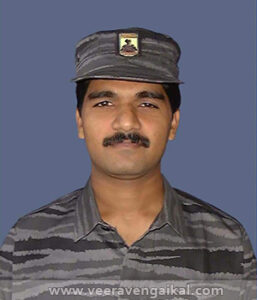
Lt Col Kannan
The heroic performance of 14 daring, unidentified Tamil Tigers on July 24, 2001 at the Battle of Katunayake Airport deserve recognition. In Tamil, there is a battle lingo called ‘pidari adi’. ‘Pidari’ is the upper region of the nape; ‘adi’ means ‘hit’; i.e., a blinding hit on the neck, which afflicts all the senses instantly. What those 14 Tamil Tiger fighters delivered to the Sri Lankan army on that day was nothing but a super grade example of ‘pidari adi’ – a sort of mauling caused by a carnivore that targets the vital carotid artery of its vulnerable prey.
These heroes had been derisively tagged as ‘Tamil terrorists’ and ‘suicide squad’ by partisan Sinhala press and analysts like Rohan Gunaratna who were given the shock of their lives on that particular day. They had to wallow in that sort of pejorative terminology, to massage their hurt feelings. I’m sure that in locations other than Sri Lanka, such as in New Delhi, Washington DC, London and elsewhere, quite a few individuals would have involuntarily excreted fluids from either orifices of the alimentary canal due to the cerebral shock caused by pidari adi.
In my view, those 14 Tamil heroes were no different from the great American bomber pilots of World War II vintage. Quite a handful of them later became household names – Jimmy Stewart (1908-1997), Paul Tibbets Jr (1915-2007), Jack Valenti (1921-2007), George McGovern (1922-2012) and Donald K. (Deke) Slayton (1924-1993). The mission and objectives of these American bomber pilots and that of LTTE’s 14 heroes who lost their lives on July 24, 2001, was the same. Inflicting maximum damage to enemy owned properties inside enemy territory had been a time-tested battlefield strategy.
In the Sri Lankan war literature of past 25 years, these 14 Tamil heroes remained unidentified and unnamed for long. Due to my impulse in finding a little bit of available information about these heroes, I succeeded in extracting their nom de gurres, photos and their birth dates from a digital site recently. The nom de gurres (with their date of births within parenthesis) of these 14 heroes are given below.
Lt. Col. Kannan (1974 Sept 8)
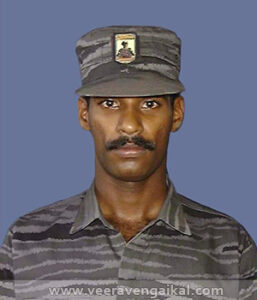
Lt Col Kanakan
Lt. Col. Kanakan (1976 Sept 18)
Lt. Col. Castro (1973 Sept 19)
Major Kennedy (1979 June 7)
Major Suresh [Deepananthan] (1979 Dec 31)
Major KanivaLan (1981 May 28)
Major Naren (1973 May 28)
Capt. Uthayan (1982 Jan 22)
Capt. Sorpathan (1978 Aug 15)
Capt. Mathuran (1978 Aug 5)
Capt. Lathangan [Parani] (1982 Apr 3)
Capt. Tharamban (1978 May 25)
Capt. Thavakanth (1981 Aug 26)
Lieut. Puliventhan (1982 Mar 10)
The age spread among these 14 fighters ranged from 19 to 28. On July 24, 2001, the youngest Capt Lathangan (Parani) was 19 years and 3 months; the oldest Major Naren was 28 years and 1 month.
To digest the heroic deed of these 14 Tamil heroes on its 25th anniversary, I reproduce below, an account of defence analyst Iqbal Athas (1943-2026), published on July 29, 2001. He died early this year, at the age of 82. There exists another lengthy account by D.B.S. Jeyaraj (1954-2026), who had written from a distance. This link is [https://tamilnation.org/tamileelam/armedstruggle/warfront/01072katunayake, accessed July 19, 2026]. Please note that the details in Jeyaraj’s account, relating to LTTE leader V. Prabhakaran are not substantiated by Iqbal Athas.
Deputy Defence Minister Anurudda Ratwatte died on Nov 2, 2011, aged 73. Lt. Gen Lionel Balagalle, who held Sri Lankan Army Commander position from Aug 25, 2000 to June 30, 2004, died on Oct 26, 2023, aged 75.
An Account of Sri Lankan defence analyst Iqbal Athas
It was past 9 pm last Monday when a group of young men arrived at Major Raj Fernando playground in Kurana, on the western outskirts of the Sri Lanka Air Force Base at Katuayake.
Clad in casual clothes, they alighted from a Mitsubishi Rosa coach carrying bulging white polythene sacks, commonly known as ‘Pohora bags’, for they are used widely to pack fertilizer. Some appeared to weigh heavily.
As the coach bearing the name board ‘MATARA’ in Sinhala, drove away, what seemed a picnic got under way. The youth ate bread with jam and ram water or orange juice. To allay any suspicions in the neighbourhood, they clapped hands and sang Sinhala songs. Later, they changed into dark coloured uniforms and disappeared.
At least two persons were not convinced by the behavior of the group. S.Sabian Dayananda Fonseka of nearby Rajasinghe Road and his friend Thilak. They felt something fishy was going on and decided to inform a SLAF guard room a short distance away. The journey there was interrupted when they met a Sergeant and a Leading Air Craftsman (LAC). The duo were part of a regular, armed perimeter patrol. Their task was to police the area ahead of the barbed wire defences and to interact closely with the public who lived in the neighbourhood.
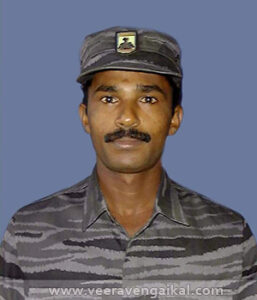
Lt Col. Castro
Mr. Fonseka and his friend told the airmen what they had seen. Later all of them walked towards the now deserted playground and found three polythene sackloads. They had contained uniforms, sliced bread, orange juice, bottles of water sarongs, shirts, slippers and some tablets. The two airmen, who made cursory examination, reportedly remarked there was no cause for worry. Mr Fonseka and his friend went home. That was around 9.30 pm.
The group of youth had overcome their first possible chance of detection. They arrived at a lonely spot to cut open the concertina wire fence and set food into the country’s largest air base, a sprawling, 700 acre complex once home to Britain’s Royal Air Force. Here acres and acres of coconut trees blended with office complexes and residential quarters where officers, men and their families, over 8000, worked and lived. On the southern end, which overlooked the runway, used both by the Air Force and airlines operating from the Bandaranaike International Airport, lay some of the high security zones. On one end is the highly secured Jet Squadron – No. 10 for Israeli built Kfir jets and No. 4 for Russian built MIG 27 ground attack aircraft. The area which includes hangars and other buildings, is covered on either side and behind by two chain link fences, running parallel to each other, separated by some eight feet. The parking apron is located in the unsecured front, divided from the runway only by a wide, concrete storm water drain. The jets cross a bridge to enter the runway for take off or landing. The area is so strictly restricted to authorized personnel that not even wives of those deployed are allowed entry. Adjoining the Jet Squadron, similarly secured by twin chain link fences, is the No 4 Helicopter Squadron, another high security zone.
The airman’s jargon for these secluded areas is ‘V zones’. Besides parking jets and helicopters inside the hangars in the two respective zones, Air Force officials also usually allow some to remain in the apron ahead of them.
This is on the grounds that the apron is considered one of the most safe areas, since the rear and the sides are covered by chain link fences and separate guard points are established to provide security.
The runway in front they felt made it more secure. Upon crossing the main gate to enter the Air Force complex, entry into Jet or Helicopter Squadrons are through another enclosure secured by a chain link fence.
It was 1.15 am on Tuesday. An Air Force sergeant, who is deployed in an SLAF base in Vavuniya, was returning on home leave. He was walking towards a married quarters close by, when he noticed some persons crossing the road, well ahead of the outer enclosure. Instead of going home, he walked towards a guard point and told the corporal on duty. It has now transpired that the corporal had not informed the officer responsible or initiated any other action. Thus the group of youth overcame possible detection for a second time.
Barely half an hour later, a group of men were seen moving around near the guard point at the Jet Squadron. A sergeant on duty immediately radioed the Operations Room to ascertain whether they had detailed any ambush parties for an operation. This was a routine regular exercise. ‘Yes’ came the immediate reply.
There was some confusion. An ambush party had in fact been assigned a task but that was nowhere near the Jet or Helicopter Squadron. But that came to light only much later. The sergeant, satisfied by the response from the Operations Room took it easy. For a third time, the youth had escaped detection.
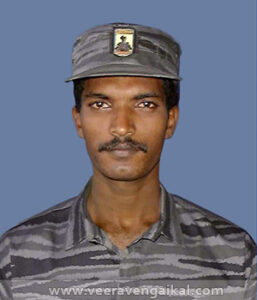
Major Naren – the oldest, aged 28
By now they had trekked some three miles through coconut land and passing building complexes. Their movement, at one point, appeared to have been delayed. At an armoury, airmen were taking charge of weapons for a pre-dawn firing exercise.
The youth now cut open a hole in the chain link fence, between the Jet and the Helicopter Squadrons, and gained entry. Mysteriously power supply in the surrounding area was temporarily disrupted when this was taking place. Forming themselves into two groups, they entered the storm water drain and parted in two directions. One group took a right turn to go in front of the Jet Squadron whilst the other turned left to go in front of the Helicopter Squadron. It was not yet 2 am. The two groups waited, evidently watching both the air base as well as the international airport. It has now become clear the groups wanted to make sure foreign airlines had taken off from the BIA just after mid night. They had been aware, there were no flights from foreign airlines at pre-dawn. At 3.50 am one group moved to surface on the edge of the runway, just outside the Jet Squadron. Another moved further and surfaced right in front of the Helicopter Squadron. They were on the Air Force end edge of the runway. Then all hell broke loose. The group who were picnickers only six hours before, were trained Black Tiger suicide cadres now. They began firing Light Anti-Tank Weapons (LAW), Rocket propelled Grenades and Grenade launchers (40 mm) at aircraft parked on the apron, just opposite the hangars at Jet and Helicopter Squadrons. And suddenly, the night lit up as flames and smoke billowed sky high. Black Tiger cadres had begun the most devastating attack in the 18 year long separatist war.
As an assortment of aircraft were engulfed in fire, both groups attempted to simultaneously force their way into the hangars in the two squadrons. More jets and helicopters lay parked inside. The guerrillas wanted to destroy them too. Bitter gun battles ensued with the airmen guarding the hangars. The guerrillas began spraying bullets from General Purpose machine guns. They pierced through the galvanised sheets of the hangar doors to cause substantial damage to aircraft inside. The doors looked like sieves. Canopies in some of the jets bore bullet holes. So did various parts of the bodies. Helicopters had damage to their windshields and other areas. That included some that were assigned to VVIPs.
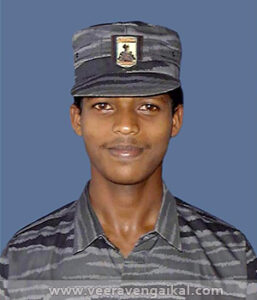
Capt Lathangan – the youngest, aged 19
SLAF Base Commander at Katunayake, Air Commodore R.A. Ananda, who was asleep in his chalet was woken up by a phone call from an officer. Even while learning about it on the internal phone, he could hear gunfire. He phoned to tell his Commander, Air Marshal Jayalath Weerakody, ‘Sir, we are under attack.’ Soon the hot lines of leading personalities in the defence establishment in Colombo were agog with the news. A Duty Officer at Army Headquarters had woken up Army Commander, Lt. Gen Lionel Balagalle, after he received the news from a specially trained Commando Unit stationed at the Bandaranaike International Airport. The Unit’s task was to deal with hijack situations. Commando and Armoured units in Colombo were ordered to immediately move out to the international airport.
Troops from the Navy’s Western Command were also rushed. Chief of Defence Staff, General Rohan de S. Daluwatte, drove to the Joint Operations Headquarters. Joining them were Deputy Defence Minister Gen Anuruddha Ratwatte, Lt. Gen Balagalle and Navy Commander, Vice Admiral Daya Sandagiri. Finding it difficult to obtain a helicopter from Katunayake due to the heavy fighting, Air Marshal Weerakkody, had driven to the Air Base. Reinforcements were yet to arrive and fighting was still raging outside the Jet and Helicopter Squadrons. Airmen resisted attempts by the Black Tigers to break into the hangars. They still remained on the edge of the runway firing machine guns at the closed hangars and engaging the airmen with assault rifles. Three airmen, taking cover near the hangars dropped dead when they were hit. During some 45 minutes of gun duels, eight guerrillas were killed and their bodies lay strewn in the area.
Just before the fighting broke out, Air Traffic Controllers at BIA had given clearance for Sri Lankan Airlines flight UL 315, an Airbus A 340, to land. Captain Ravi Thambipillai, commanding the aircraft Alpha Delta Delta, was bringing in 315 passengers from Djakarta and Singapore. A 12 member crew was on board. When he touched down, Air Traffic Controllers assigned him slot Alpha 14 in the parking bay. He logged chocks on time as 3.35 am. That is the time the aircraft’s self power system, or the engines, are knocked off. When it is logged on GMT, it is referred to as Zulu time. The passengers had disembarked and were waiting for their baggage to arrive.
A while earlier, Captain Gamini Gunatilleke, had arrived from Male bringing in 102 passengers on board Alpha Delta Charlie, an Airbus 340. The Colombo-Male run was usually operated on an Airbus A 320 but that Tuesday there were 243 passengers. Hence the bigger aircraft was flown. However, on the return journey, all 106 passengers who had booked for the flight, had checked in. So UL 106 left Male half an hour early to Colombo. A scheduled arrival would have led to a diversion since the fighting had broken out by then. The aircraft was assigned slot Bravo 4. These passengers had also disembarked and were awaiting the arrival of their baggage. With eight of their colleagues dead, six Black Tiger cadres found it difficult to move towards the hangars. So they sprayed more machine gunfire and turned towards the international airport. Only six airmen were guarding the entry point from the runway. It is located almost directly opposite the Helicopter Squadron, across the runway and the parking aprons. As they crossed the runway, the guerrillas fired with general purpose machine guns (GPMG). Oil tanks began to leak. It was followed with fire from 40 mm grenade launchers. Fire immediately engulfed the aircraft – Alpha Lima Foxtrot, (Airbus 330) which was parked at slot Alpha 17. Its fuel tanks had been filled and the aircraft was ready for a flight to Rome later that morning. A team of airmen led by Flight Lieutenant Sulochana Manapperuma shot dead one of the guerillas. Later another [was] killed on the Bravo side of the Apron. Their bodies lay on the Apron.
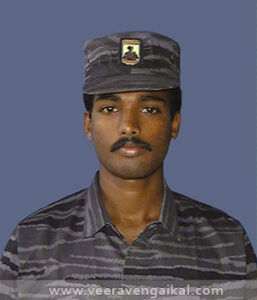
Major Kennedy
Pandemonium broke loose. Technical personnel on the ground ran for cover. The news reached the terminal building. Security staff barked orders to the passengers to leave immediately. There was no time to collect baggage. Customs, Immigration, airline staff, employees in duty free shops, airport restaurants and the passengers rushed out. A massive stampede began. With no transport available, many, including tourists, walked along the Canada Friendship Road, turned towards the road leading to the Export Processing Zone to continue their trek along Baseline Road to Seeduwa. There was panic as they spread the news that the airport was under attack.
Alpha Lima Echo, an Airbus A 330, which lay at parking slot Alpha 13 was towed and parked at slot Alpha 18. That was done following fears that the fire on the first aircraft would spread. In the rush, the aircraft was positioned in the wrong direction, facing the BIA Air Traffic Control Tower or eastwards. Usually they were parked facing westwards. A guerrilla, who emerged from nowhere, placed an explosive charge as he and three colleagues moved towards the terminal building. The aircraft exploded into flames.
The empty terminal building was now occupied by four Black Tiger guerrillas. Two of them were inside whilst the other two climbed the roof of the terminal building. Dawn had broken. Army commandos and reinforcements had now arrived and a fresh round of gun battles ensued.
A loud explosion ripped the terminal building raising fears that a bomb had exploded. It soon transpired that cornered by the corned by the commandos, a guerrilla had exploded explosives strapped to his chest. It occurred near the baggage handling area. Later another bomb with a timing device was deloused. A commando died in friendly fire. More fighting continued with another guerrilla committing suicide. Three more airmen were also killed. The time now was 8.35 am on Tuesday. One of the guerrillas on the roof of the terminal building fired a Rocket-propelled grenade. Alpha Delta Delta, Airbus 30 which had returned from Djakarta and Singapore burst into flames. There were more than 100 armed airmen and other security forces personnel on the ground when the attack came but miraculously none of them were hit. Later, they shot dead the two guerrillas on the roof. That was how three Airbus aircraft of Sri Lankan Airlines were hit by the Black Tiger guerrillas. ‘The last 36 hours have probably been some of the most traumatic and indeed challenging in the over 20 years history of this airline’, Sri Lankan Airlines Chief Executive Officer, Peter Hill declared. Besides the three aircraft destroyed, three more (two Airbus A 320s and an Airbus A 340 which returned from Male) were damaged. The two A 30s had over 200 and the other, 17 bullet holes. Fighting had just ended. Captain Pujitha Jayakody, one time Flight Operations Manager, taxied away an A 340 from the scene, as the other aircraft burnt. He did this single handedly. There was no technical staff to push the aircraft back. With the help of airmen, he removed the stairway that remained attached and taxied out.
When the nearly six hour drama ended, the Colombo International Airport was closed. Incoming flights were diverted to Dubai and to South Indian airports.,,,,
CID detectives began to uncover some startling details. At the Major Raja Fernando playground, the Black Tiger rebels had left behind some tell tale evidence. That included empty casings that once held Night Vision devices and material used by manufacturers to pack grenades and RPGs. There were 14 pairs of high heel shoes and civilian clothes. There were also left over food and other items. Inside the Air Base, the attackers had left behind three General Purpose Machine Guns (GPMGs), nine Chinese built T-56 rifles, eight explosive charges, six Light Anti-Tank Weapons (LAW), Gas canisters, Flares (made in Sweden), ration packs (made in Norway) and a hitherto unidentified silencer gun. They also carried an improvised device equipped with charges, to cut open fences.
The body count and the pairs of shoes made detectives believe there were only 14 Black Tiger guerrillas involved in the incident.
However, they suspect that there were others who had dropped the group at the playground and those who led the attackers into the Air Base. Inside collusion is not being ruled out. A full probe is under way.”
An account of Rohan Gunaratna in Sept 3, 2001
[Note by Sachi: Following is an accessible synopsis of 932 of 2802 words, picked up on July 17, 2026; the rest of the material, is beyond a pay-wall.]
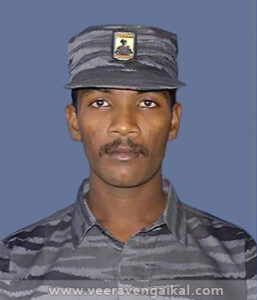
Capt Mathuran
“A suicide squad of the Liberation Tigers of Tamil Eelam (LTTE) staged an audacious attack on Sri Lanka’s Bandaranaike international airport and the adjoining air force base at Katunayake on 24 July 2001. In three waves, a highly trained and heavily armed 14-man squad penetrated the 800-acre high security complex and destroyed or damaged 26 commercial and military aircraft. The attack is the biggest terrorist operation so far launched by the LTTE and the most destructive terrorist attack in the history of aviation. The suicide dimension – 14 members targeting 26 aircraft – made the operation cost effective.
The approach: The suicide squad escorted by an LTTE intelligence team arrived in a Mitsubishi Rosa at a playground near the target location on the eve of the attack. Usually LTTE intelligence teams living in the south of the country provide suicide members with security, board, lodging, transport, communication and intelligence support to accomplish the mission. Although the suicide squad and the intelligence team were young Tamils, they clapped hands to Sinhala music to deceive the locals that they were Sinhalese. After joining the suicide squad for a final meal, the intelligence team returned to its safe house with the intention of continuing its intelligence gathering and other support operations. However, the recovery of a balaclava and night vision devices suggest that either the intelligence team escorted the suicide squad into the complex or was inside the complex providing updated intelligence until the suicide squad was launched.
After changing from civilian clothing to military uniform, the suicide squad entered the international airport and the adjoining air force base through a path situated at a rear entrance to the playground, which was used by air force personnel going on leave. The suicide squad then passed by a sewage farm, the base HQ, base commander’s residence, officers’ mess and the married officers’ quarters. After entry, two civilians intending to report the suspicious gathering of the youths, met two airmen on a regular perimeter patrol who came and examined three bags left behind by the suicide squad. After examining the bags containing uniforms, food and clothing the airmen surmised that they must have been left behind by tourists.
After cutting a hole in the chain link fence controlling access to the Vulnerable Area (V-area), the squad entered the parking zone and hangers. To reach the fixed-wing aircraft and the helicopter squadron located in opposite directions, the suicide squad split into two groups and began to move along a storm water drain. The journey, especially the entry into the V-area, was facilitated by a routine nationwide power cut that began at 9.45 pm to reduce electricity consumption.
The attack: At 3.50 am, the two suicide groups emerged out of the storm water drain. Standing 700m apart on the air force side of the runway, the two groups fired at both the military aircraft parked on the apron as well as into the hangers housing additional aircraft. They used six light anti-tank weapons, three rocket-propelled grenade launchers (RPGs) and one 40mm grenade launcher, as well as nine T-56 assault rifles and three general-purpose machine guns (GPMGs). Although the suicide squad failed to penetrate the hangers, the attack destroyed eight aircraft on the apron and damaged two in the hangers. Other than firing into the hangers with the GPMGs, the squad fired the stand-off weapons on to the top of the hangers. After an hour of fierce combat, three airmen and eight suicide squad members were dead.
As the resistance against the attack mounted from the airbase, the surviving six-member suicide squad crossed the runaway into the international airport. After challenging six airmen guarding the runway, they fired at an oil tank first with GPMG rounds and, once it started to leak, with a 40mm grenade launcher. The blaze destroyed a nearby A-330 Airbus. Of the six suicide members, two members seeking to destroy aircraft of Sri Lankan Airlines were killed by a team of airmen. After a lone suicide bomber placed an explosive charge on an A-330, the explosion ripped off its two wings from the fuselage and the aircraft caught fire. Thereafter, he joined the other three bombers approaching the terminal building. While one suicide bomber exploded inside the departure cargo, the remaining three climbed the air-conditioned duct entering the duty free complex. One climbed on to the roof of the terminal building and fired an RPG on to an A-340 and destroyed it: two others died in the chiller room. At all stages of the operation, they demonstrated intimate familiarity of the airport layout and structure.
After five hours of fierce fighting, 26 aircraft had been destroyed or damaged, including two Airbus-320s and one Airbus-340 that were damaged by friendly fire. Six airmen were killed and eight wounded, while one commando was killed by friendly fire and four soldiers were wounded. No tourists were injured. Three Sri Lankan civilians including one TV journalist and one Russian engineer were injured. The injury to a foreign national classified the Katunayake attack as an act of international terrorism by the LTTE, a group proscribed as ‘terrorist’ by the USA, the UK, India, Sri Lanka and Malaysia.
Catastrophic failure of security: The LTTE attack exposed the shaky foundations on which the country’s national security structure was founded. It questioned the government’s capacity to develop intelligence, forecast threats, protect its critical infrastructure and prepare appropriate force structures to disrupt LTTE operations in the government-held south. It also symbolised the sharp decline in the capability of the Directorate of Internal Intelligence (DII), responsible for anti-terrorist (protective) intelligence as well as counterterrorist (offensive) intelligence.”
Coda
The prime reason for the pidari adi by LTTE at the Battle of Katunayake on July 24, 2001, was provided by Iqbal Athas, five months prior to the event. In his Feb 4, 2001 Sunday Times column, Athas published a commentary with the caption ‘Tracking an SLAF bombing mission’. It had the following lines:
“The Kfir and MigG 29 jets from the SLAF’s Number Ten Jet Squadron, the most elitist in the organization had just taken off on one of its many aerial sorties to attack Tiger guerrilla targets, At the time they took off, I was unaware of their exact target, though I knew they were heading north. The pilots returned in less than an hour to report on the outcome.
The mission had been accomplished. Black smoke was billowing skywards soon after the bombs, dropped from the jets, exploded….” Those interested, please check the link given below, which also provides a bombastic interview of the then Air Marshal Jayalath Weerakkody. Those like Rohan Gunaratna who claimed that July 24, 2001 battle was a suicide mission, simply overlook the issue that the SLAF bombing missions by Sinhalese army were equally terrorist acts too.
****
Consulted Sources
Anon: The Tigers pounce. Economist, July 21, 2001.
Anon: Daring suicide attack on Airport. Tamil Times (London), July 2001; 20(7): 4-5.
Anon: No reconciliation. Economist, Sept 1, 2001, p. 28.
Iqbal Athas: Tracking an SLAF bombing mission. Sunday Times (Colombo), Feb , 2001. https://www.sundaytimes.lk/010204/sitrep.html (accessed July 19, 2026).
Iqbal Athas: LTTE’s three times lucky terror at Katunayake. Sunday Times (Colombo), July 29, 2001. https://www.sundaytimes.lk/010729/sitrep.html (accessed July 17, 2026).
Rohan Gunaratna : Intelligence failures exposed by Tamil Tiger airport attack, Janes Defence Weekly, Sept 3, 2001.
Nirupama Subramanian: Terror at Katunayake. Frontline (Madras), Aug 17, 2001; pp. 51-53.
See also: 20 years since the LTTE assault on Katunayake air force base | Tamil Guardian