by Sowmiya Ashok, December 23, 2025
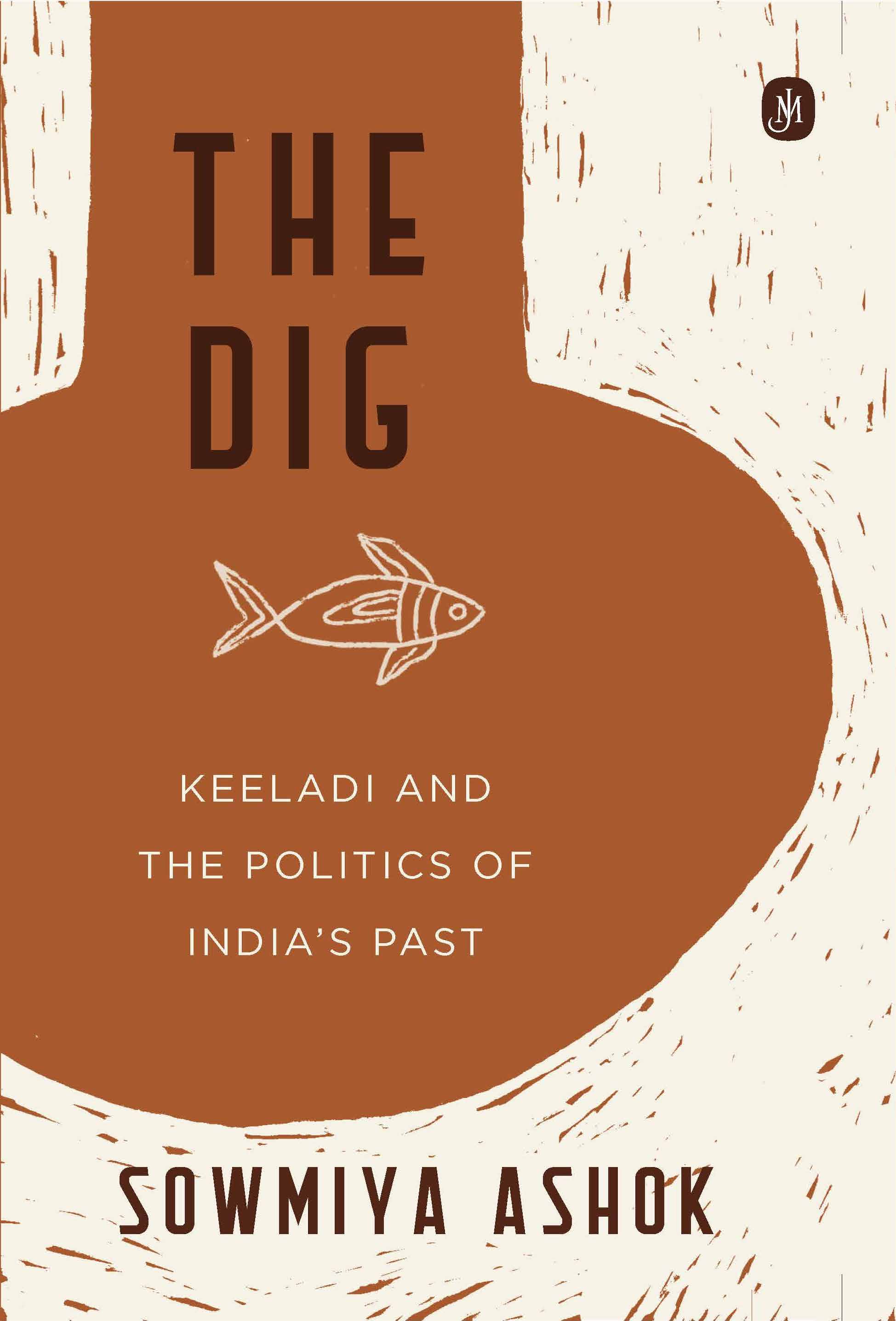
Since its discovery in 2014, the Keeladi excavation has become one of India’s most contested digs – hailed by some as proof of an urban civilization in South India and dismissed by others as political mythmaking.
Journalist Sowmiya Ashok traces the serendipitous discovery of this ancient settlement and the political storm it set off.

Sowmiya Ashok
Her journey takes her from the earliest Iron Age sites in Tamil Nadu to the Harappan site of Rakhigarhi in Haryana and the lost port of Muziris in Kerala. Along the way, she chats with archaeologists while sweating under the scorching sun, clings to rickety platforms at a roaring jallikattu arena, and even tastes ancient pottery at an excavation site.
Blending sharp insight with humour, The Dig reveals how political battles over science and history continue to shape our understanding of India’s past.
- Pub Date : DEC 23, 2025
- Imprint : John Murray
- Page Extent : 320
- Binding : HB
- ISBN : 9789357317504
- Price : INR 799
Sowmiya Ashok is a journalist based in Chennai with over 14 years of experience. She has been a correspondent for leading Indian dailies such as The Hindu and The Indian Express, reporting on politics, environment, and culture. In 2019, she reported from Beijing, bringing insightful pieces from China. She holds an MA in political journalism from Columbia University, New York, and has reported from the US, Taiwan, and Sri Lanka.
Keeladi, a Sangam laboratory | Review of Sowmiya Ashok’s The Dig
Ashok couches the glory of a 2,600-year-old past within the larger political and emerging cultural tensions of India
by Ramya Kannan, The Hindu, Chennai, January 02, 2026

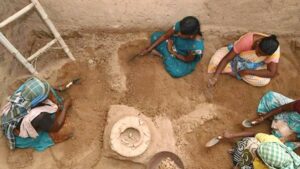
The revelations from Keeladi are awe-inspiring, whether one is inclined to study the past or not. | Photo Credit: ASHOK R
It is fascinating how mere dirt can yield such greatness; empires rise from the mud, dwarfing the grandiloquence of the present, sufficient to humble the human race. Naturally, the disruption of the ground beneath our feet is likely to cause upheavals. Just as the digs at Keeladi have done.
The revelations from Keeladi are awe-inspiring, whether one is inclined to study the past or not. In the maelstrom of what the past has come to mean, however, it has quickly morphed to become the launch pad of language, cultural and racial chauvinism.
Invading lives
Sowmiya Ashok’s The Dig attempts to do justice not only to a past that’s over 2,600 years ago, but importantly couch the glory of Keeladi’s treasures within the larger political and emerging cultural tensions of India. “Suddenly Keeladi was everywhere,” she says, reflecting what most Tamils living in the State discovered. Keeladi invaded lives; in the minds of Tamils, it was the equivalent of discovering the Indus Valley Civilisation, or King Tut’s intact tomb in Egypt — history-altering in a cataclysmic sort of way.
However, the story is not the easiest to tell. The glory often arrives belatedly on the back of carbon dating reports; initially, there is merely hope and a prayer on the lips of archaeologists working at the digs, besides some systematic scratching at the dirt.
The Beta Analytic Lab in Miami, Florida, where the samples were sent for carbon dating, found that the cultural deposits unearthed during the fourth excavation at Keeladi in Sivaganga district could be safely dated to a period in 6th century BCE, thereby pushing Keeladi back by about 300 years earlier than was first believed.
After this, as Ashok says, “Everyone was certain that Keeladi was precious. It was a purely Sangam site, offering tangible proof of the advanced thinking of the people of the Sangam Age. Keeladi became a Sangam laboratory where archaeologists and epigraphists seemed to feed verses into the trenches and evidence emerged in physical form.” Phrases like these could well be the modern-day version of a verse from the Purananuru poems of Sangam literature — succinct and revelatory.
As the trenches deepen and locals gain familiarity with several tools of the archaeologists’ trade, it became increasingly clear that “Keeladi showed similarities to Harappan sites graffiti marks scratched on to pots, comparable urban planning features, bangles made of conch shells and more.”
Nearly a decade ago, the media realised Keeladi was the literal pot of gold, and began writing, chronicling furiously every piece of pottery shard, every urn, every carnelian bead to turn up. Since archaeology has come to stand for power and politics, the major historical discovery at Keeladi automatically got swept up in a tornado of action, claims and counter-claims of sovereignty.
The swirl it has been since caught up in defies clarity, but the author has a go anyway, trying to separate the tendrils that have curled around language pride, emerged as a counter to hegemonic forces, and to see this site for the staggering historic value it embeds.
An advanced civilisation that lasted for nearly 800 years, dating as far back as the 6th century BCE, can actually be more than the sum of its parts.
People at the dig
The Dig is in part also about the people at the dig – the archaeologists, including the most controversial one among them all, Amarnath Ramakrishna; the people who dig and scrape the dirt off the pottery shards, the people who extract DNA from the cochlear bone of ancient skeletons, people who do video tours, and historians who make podcasts, those who read the Tamil Brahmi and vatteluttu scripts. Ultimately, every dig is as much about the living, as it is about the dead who call out to them. Ashok’s easy familiarity with these people brings a sense of the living into the book, and crucially, a sense of what Keeladi means to Tamils.
It is through these interactions she records so meticulously that we learn of the tussle with the Archaeological Survey of India, how assertions by an archaeologist brought down the Babri Masjid and theories galore about Aryan invasion.
We also learn about archaeologists cosying up to the ruling dispensation, all interspersed with a running thread of small talk that parses grand claims against the opinions of people she encounters. She knocks back some of the chest thumping with quotes from people who champion a sedate study of history, and as Keeladi becomes overshadowed by interpretations, she sets out to separate the wheat from the chaff.
Through this companionable pilgrimage emerges an intimate picture of the shrine of Keeladi, warranting pride in identity. At the same time, it remains juxtaposed against a holistic acknowledgement of diversity and the wonderful melting pot that is India.
—————————————————————————————————————-
TN’s Keeladi dig shows us the perils of politicising the past
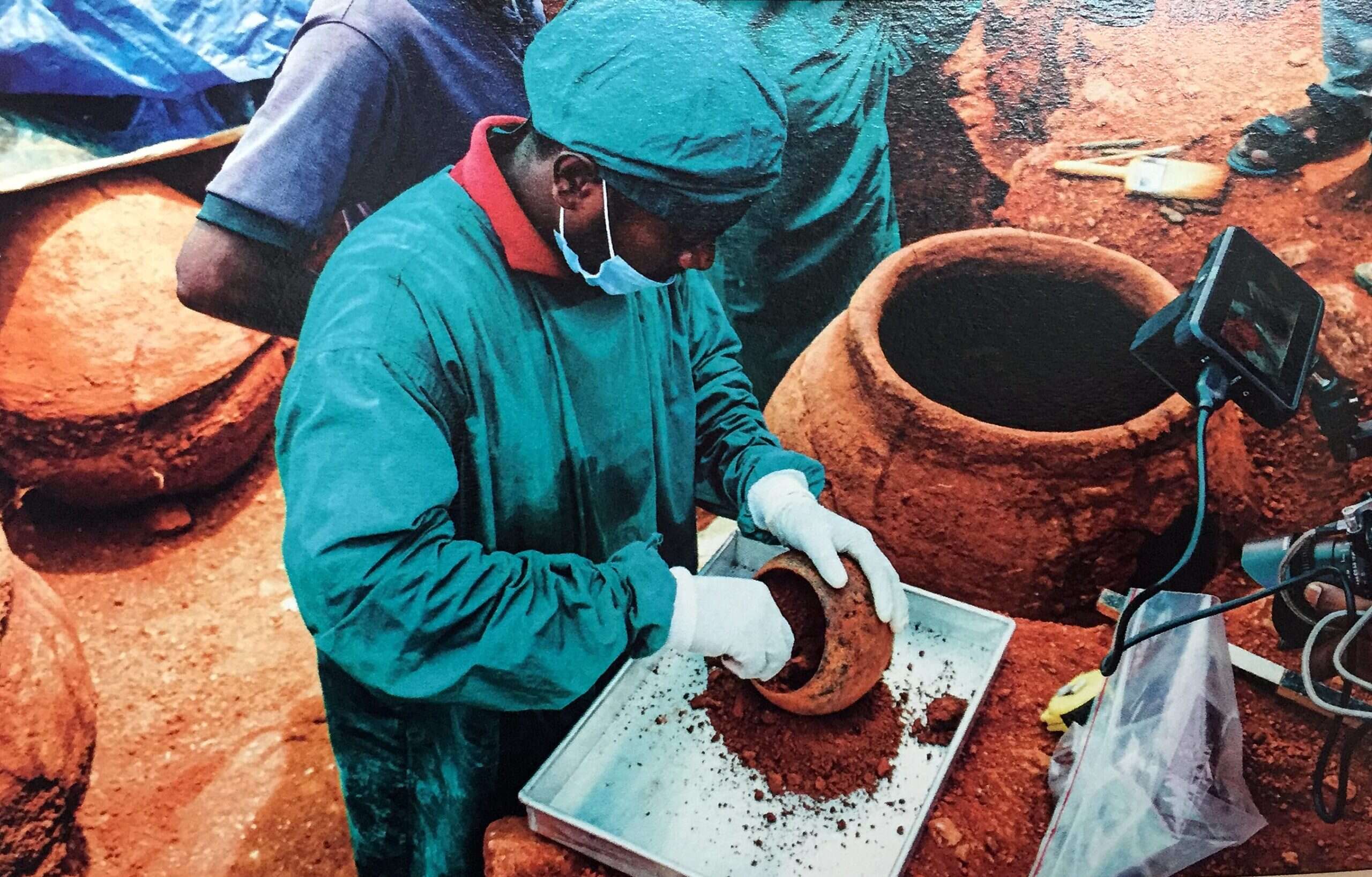
Deep Dig: Excavations enrich our understanding of the past. They should not become battlegrounds
Keeladi has captured the public’s imagination in Tamil Nadu at scale. The rest of India is only noticing it now, owing to a spat between the archaeologist who discovered the site, K Amarnath Ramakrishna, and his employer, the ASI. Ramakrishna dated the site to the 8th century BCE and the ASI asked for “concrete justification” for the dating. Ramakrishna, trained by the same agency that was now challenging his findings, refused to change his report. In an interview with this paper, he termed any changes “criminal”.
 by Peter Gordon, Asian Review of Books, January 11, 2026
The importance of archaeological developments can take a long time to register in the general public consciousness. This is perhaps because excavations take years, results are often published long after the work begins, the significance is not immediately apparent, or conclusions are denied when they run counter to conventional narratives. Keeladi, near Madurai, is a site discovered a decade ago; its significance was appreciated pretty quickly in Tamil Nadu, where it is located, but has rather flown under the radar internationally.
The Dig: Keeladi and the Politics of India’s Past is really several books in one: an overview of the archaeology of the site and where it fits in Indian history, a discussion of how politics and archaeology interact in India and finally a blend of reportage and travel writing, as author and journalist Sowmiya Ashok recounts a decade of first-hand, on-the-ground investigation in Keeladi and at other sites throughout India. Unfortunately, the archaeology is often overshadowed by the discussion of the politics; while this is perhaps the book’s point, the history itself is far more interesting than what politicians have to say about it.
The excavations at Keeladi gave physical reality to classical Sangam-era poems.
The primary importance of Keeladi is that it seems to be the first evidence of urbanization in India’s South during the so-called Early Historic Period (600-300 BCE). The precise dates—how far back the site in fact goes—are somewhat disputed. The importance of Keeladi is nevertheless twofold. First, it overturned a conventional narrative about urbanisation in South India lagging behind that of the “second urbanisation” in the Gangetic plains of North India (“second”, because it followed the collapse of the great cities of the Indus Valley Civilisation). Further, Keeladi fits firmly into the period during which Tamil-language Sangam poetry was flourishing; the excavations at Keeladi gave physical reality to classical poems that had previously hovered on the edge of mythology.
This should perhaps not have been as surprising as it seemed to some. It has been known for some time that Rome had extensive trade with South India, to the extent it had a significant effect on the Imperial budget (something covered in William Dalrymple’s The Golden Road). Urban centres might have been expected; indeed, archaeologists had gone looking for them.
Keeladi, it must be said, doesn’t impress in the same way as its other classical cities: no marble temples, frescoes or flagstone-paved streets. But to an archaeologist, there is much of interest: brick walls, ring wells, drainage systems, evidence of workshops, burials. There was writing, usually scratched on potsherds, in the Tamil-Brahmi script; this was hardly unknown, but some finds at Keeladi challenge previous dating, while the quantity testified to literacy that was not restricted to elites or scribes.
The politics is less interesting than the archaeology.
Ashok includes a lot of vox pop (visitors, workers, neighbours) as well as interviews with the professionals. Modern-day Tamils from all walks of life found in Keeladi a sort of validation, a confirmation of separate identity and a history distinct from the Vedic narrative that prevailed in the North. The latter raised some hackles for the Tamil/Hindi split has a long history. But in today’s India, Keeladi also got in the way of a Hindu nationalist narrative which draws history back to the epics.
Some early claims about Keeladi made the situation worse: links were intimated (despite a chronological discrepancy of a millennium or more) with Harappa and Mohenjo-daro, the large urban centres of the so-called Indus Valley Civilization (being in Pakistan, Ashok could not visit those; she had to settle for Rakhigarhi on the Indian side of the border). This stepped on other toes.
The current historical consensus, based on evidence from linguistics and genetics more so than archaeology, is that North India’s Indo-European languages (Hindi, Bengali, Gujarati) derive, whether by invasion or migration, from peoples from the steppe, people who brought with them—in the mid-second millennium BCE—the horse, chariots, a language that became Sanskrit and the basis of the stories that became the Vedas. That Vedic India has its origins outside India—that the grand structures at Harappa might be something other than Indo-European and Vedic—rub a number of people, including some Indian archaeologists, the wrong way.
Ashok points out that this has led to some pretty dubious interpretations of archaeological data, perhaps some less than strenuous evaluation of certain outlier lab results, and some controversial personnel transfers in the Indian archaeological establishment.
Intellectually annoying, this attempt to bend archaeology to politics is less interesting than the actual history. While still a bit hazy, the evolving consensus is that the denizens of the Indus Valley Civilization spoke some early version of Dravidian, the same language family as Tamil. Whether the people who built Keeladi are descendants of the people who may have migrated south when their civilization went into terminal decline in the second millennium BCE or whether they had been here already remains unclear. What seems clear is Vedic culture had its origins outside India, as part of the great explosion of Indo-European speakers. One suspects that the alternative theory—that Indo-European originated in India and spread from there—will at some point prove itself untenable.
There is another book to be written.
One drawback is Ashok is not herself an archaeologist; she is modest—perhaps a bit more than she need be—about her knowledge of the subject. The comprehensive coverage of the various meals she had on this journey seems at times like compensation.
There are indeed some anomalous results: iron from Tamil Nadu that dates back 5000 years, the supposedly third-millennium BCE chariot from Sanauli and some Tamil-Brahmi inscribed potsherds that predate by some margin the Northern Ashokan-era Brahmi script when it theoretically derives. If confirmed (and some think they are), these would upset several different apple carts. Despite dropping terms like IVC (Indus-Valley Civilization), PGW (Painted Grey Ware) and Chalcolithic, Ashok focuses on the political controversy and really only skims the surface of the actual archaeology.
To be fair, the field and archaeological consensus is in a state of flux—narratives are rarely as simple as they first appear—and Ashok has at least gotten out in front of it. But there is another book to be written. Perhaps in a decade once things settle down. Until then, The Dig—and a lot of Googling—will have to suffice.
The Dig: A deep dive into the past
 On December 21, this journey of discovery, in the form of a book, The Dig: Keeladi and The Politics of India’s Past, was launched by an eminent archaeologist V Vedachalam. An informative conversation filled with curiosity and humour, between writer Sowmiya and Shabbir Ahmed, senior news editor with The News Minute, was a walk through the process of creating the book. An evening with a coterie of book enthusiasts and well-wishers gathered at Ashvita’s — a small space reflecting coarseness and elegance — with splashes of paintings around. Something so intentionally raw about the room made it the perfect space for a discussion on archaeology and the old remnants.
Writing a book, for Sowmiya, was about preparations and frequent journeys. Her philosophy was to “show up everywhere”, be it an archeology conference, a talk of a script, meeting people, or visits to the Tamil Nadu State Department of Archeology or the Archeological Survey of India (ASI). She calls it the process of “trial and error”. The journalistic impulses nudged her to keep showing up.
As someone who believes that archaeology is so politicised in our country, she didn’t want to document this excavation site with political narratives. Sowmiya had a clear idea that she wanted to make the book about people who are working despite politics, despite the lack of funds. “I spoke to people as wide as I could go. The voices and diversity are what I wanted to capture,” she said. But she also shared that this made the story even more complicated, because our origins themselves were complicated.
These excavations trace back to the past, where one can see “more cultural exchanges and different parts of the subcontinent.” There were comparisons made with Harappan sites and the Indus Valley Civilization. She reasoned, “Ever since Independence, and we lost these big sites to Pakistan, there’s been a quest to find parallels of the Indian sites.”
With layers of excavation, “some of the definitions of what constitutes urban” is also what Sowmiya writes in her book. What is a marker of “urban” doesn’t have a concrete answer — they aren’t just remnants of structures and materials, she emphasised. “More excavations lead to more understanding, and that’s what I have tried to say in the book as well,” she shared.
For her, the process of writing was both exciting and transformative. It was a space for her to understand her own origins, which she says, “is more complex than I thought”. Every day was a learning experience — be it lengthy conversations with experts or close interactions with the locals. Sowmiya recalled her long conversations with K Amarnath Ramakrishna, the then ASI’s superintending archaeologist, who initiated the excavation at Keeladi.
When asked about the people who are pushing the Archeology Department forward, Sowmiya said that, be it the Archeology Minister or the Commissioner of the Tamil Nadu State Department, there is a political push that stems from their personal passion for history and archaeology.
The launch concluded with a reading session, where she presented excerpts from the book. With a tone so light and hearty, words swollen with keen observations, and humour, Sowmiya led the audience to the excavation site. True storytelling indeed.