A Civil Servant Who Told the Truth
by Pitsanna Shanmugathas, Groundviews, Colombo, June 15, 2026
Dr. Devanesan Nesiah spent decades in service to a country that rarely made it easy for him. A Tamil civil servant of uncompromising integrity, he worked through pogroms, broken political compacts and civil war, holding fast to a conviction that Sri Lanka’s crisis was not irresolvable, only unresolved. His death on June 12 closes a witness account that the country could not afford to lose.
When the July 1983 pogrom erupted, Dr. Nesiah was Government Agent of Jaffna. More than 60,000 displaced persons poured into the peninsula. The state media claimed that around 20 people had been killed in a shootout with militants. Dr. Nesiah said he went “Round the peninsula, personally checking on the dead and burning bodies” and told local and foreign media the truth: at least 50 civilians were dead, “spread over the peninsula and therefore unrelated to the ambush except as revenge killings”. Dr. Nesiah was threatened with interdiction. He documented his evidence, sent it to Colombo and the charges collapsed.
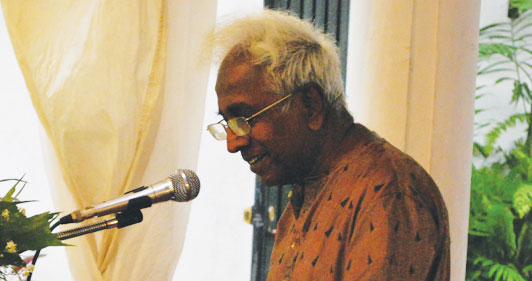
Dr. Devanesan Nesiah
In an interview I conducted with Dr. Nesiah for my documentary Neelan: Unsilenced, which explores the life and legacy of constitutional scholar Dr. Neelan Tiruchelvam, he offered an unsparing assessment of J.R. Jayewardene’s role in the violence: “JR [Jayewardene] was really indirectly the mastermind of those riots. And he used those riots for his own purposes. He was never friendly with the Tamils. He was never friendly with me. He was always hostile to me.”
Dr. Nesiah had, in fact, been informed about the pogrom years prior. Around 1980, Professor A.J. Wilson and Dr. Tiruchelvam came to tell him that President Jayewardene had privately disclosed a blueprint for an islandwide anti-Tamil pogrom, describing it as terrible and proposing the District Development Council (DDC) scheme as a mechanism to avert it through sustained Tamil-Sinhalese political partnership.
Dr. Nesiah recounted that he saw through President Jayewardene’s deceptive framing immediately. The DDC provided, in his view, little or no devolution, with whatever decentralisation existed flowing to the District Minister rather than to any elected council. Professor Wilson and Dr. Tiruchelvam acknowledged as much but said the president had promised that meaningful powers would follow if the scheme proved viable. When Dr. Nesiah asked Professor Wilson and Dr. Tiruchelvam whether they believed that promise, they confessed that they too had reservations.
Dr. Nesiah believed that the Tamil people never genuinely sought a separate state. He held this view not as consolation but as historical analysis and he stated it plainly in his final years.
In the documentary Neelan: Unsilenced, Dr. Nesiah asserted, “My own view is that the majority of the Tamil population were not in favour of secession ever because that would have been a non-starter… Even if it was ever achievable, which I don’t think it was, it would not have lasted as an independent state for more than a few weeks”
He traced the drift toward separatism not to authentic Tamil desire but to a series of broken promises and acts of state violence that had exhausted the federalist generation. In an article Dr. Nesiah wrote titled Towards a North-Eastern Consensus, he noted that, “Till the early 1970s, at every political election, every candidate on a secessionist platform was overwhelmingly defeated”. The LTTE, he argued, did not represent Tamil sentiment; it suppressed all alternatives to its own position. Dr. Nesiah told me that the LTTE “Ultimately marginalised all the other Tamil groups and for that matter the Tamil political parties… and imposed their views on the political situation and changed the course of history”.
Even Tamil civil rights leader S.J.V. Chelvanayakam’s eventual turn toward secessionist language, Dr. Nesiah suggested, may not have been sincere. What had changed was not the Tamil people’s aspirations but their exhaustion, beaten down by Sinhalese political leaders that had cheated them after winning elections, stripped Tamil of official status and then set mobs upon them.
If Dr. Nesiah rejected separatism, he was equally insistent that genuine federalism was the only honourable answer. And he understood precisely why the LTTE opposed it. Dr. Nesiah told me that the constitutional reform proposals Dr. Tiruchelvam helped formulate for President Chandrika Kumaratunga “was definitely in favour of a federal constitution and Chandrika approved of it and I think that is why [Neelan Tiruchelvam] was killed because federalism was the one thing that The Tigers feared most.” When I asked Dr. Nesiah why the Tigers feared federalism most, he answered without hesitation. “Because that would undermine their demand for secession. Because given the chance, the option of federalism and secession, the Tamil people will opt for federalism.”
In November 2018, when President Maithripala Sirisena unconstitutionally dissolved parliament, Dr. Nesiah wrote an open letter and returned the Deshamanya national honour President Sirisena had awarded him the previous year. His explanation was quiet and final. “To always act in accordance with my principles is a burden that I’ve embraced with pride for nearly 60 years, since I first enrolled as a cadet in the Ceylon Civil Service.”
He was writing from abroad. He said he would hand back the medal when he returned to Sri Lanka in person. That gesture, unhurried and without theatre, was Dr. Nesiah exactly: accountability without self-dramatisation, principle without performance.
Dr. Nesiah’s final assessment to me about where Sri Lanka now stands was bleak. “We have a very unsatisfactory devolution system which is way below even what was agreed to between the Sri Lankan and Indian governments and the 13th Amendment to the Constitution.” He did not dress it up, asserting that, “This unsatisfactory devolution system doesn’t please anyone”.
What Dr. Nesiah leaves behind is a body of writing, a record of service and a clear moral position that the Tamil people never truly wanted to break Sri Lanka apart, that what they wanted was equality and a genuine share of political power within a united country, and that this was always achievable if the will existed to pursue it. Dr. Nesiah’s life was proof that such will is possible. Sri Lanka’s history is a record of how rarely it has been exercised.
The man who stayed in Jaffna when others fled, who counted the dead when the government denied them and who returned a national honour rather than lend his name to illegality, spent 60 years asking Sri Lanka a single question: whether a united country with genuine power sharing was still possible. He believed it was. Sri Lanka has not yet answered him.
CPA Statement on the Death of Dr. Devanesan Nesiah – Centre for Policy Alternatives