in landmark court disclosure
by Tamil Guardian, London, April 7, 2026
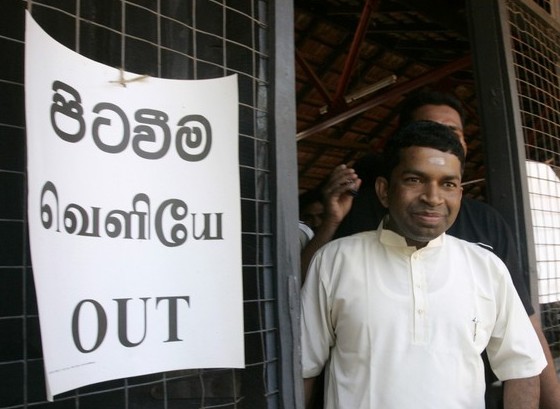
Pillayan
The disclosure was made before the Mount Lavinia Magistrate’s Court, marking a significant development in a case that has remained unresolved for nearly two decades.
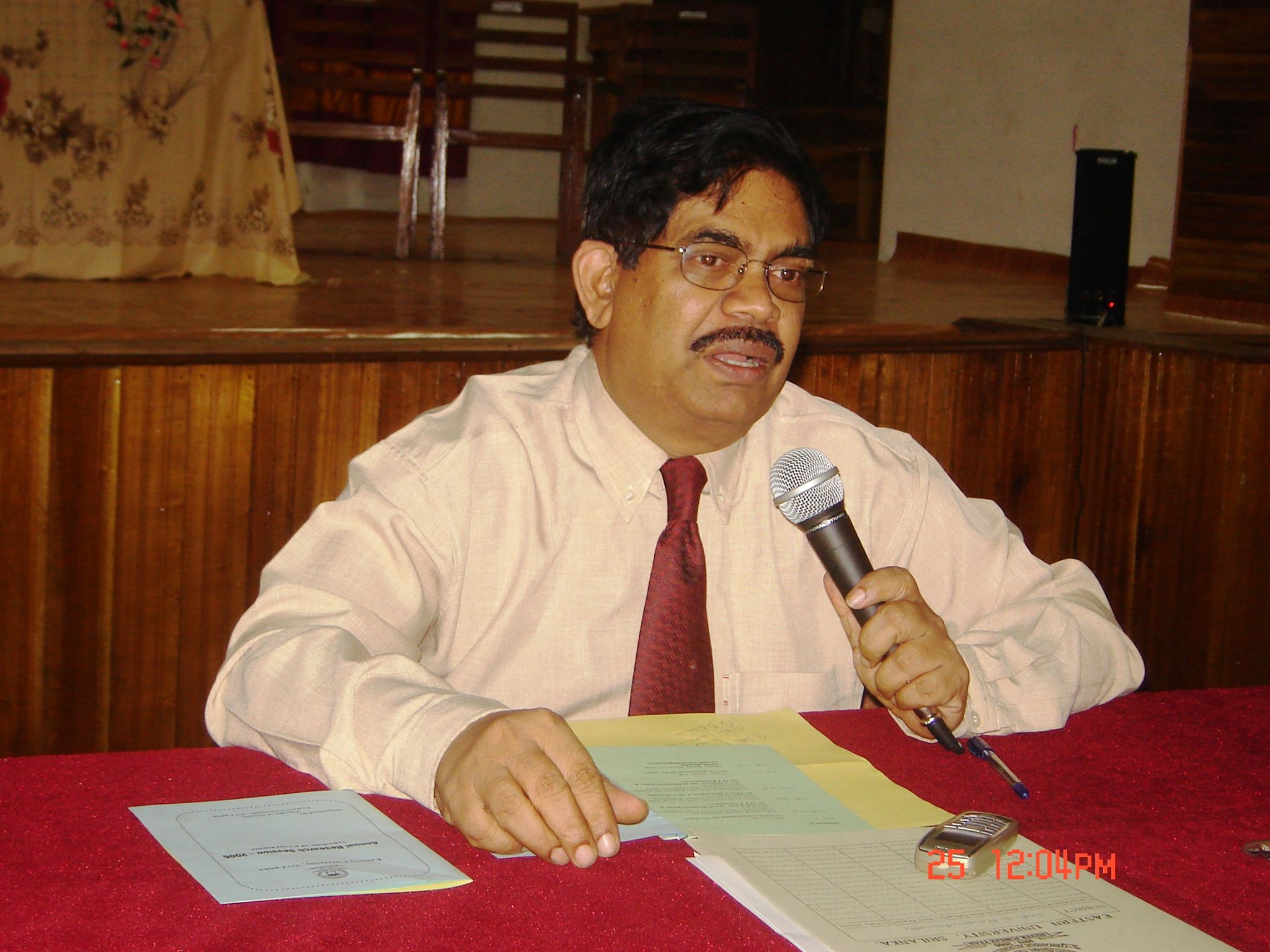
Raveendranath was abducted in Colombo between 15 and 16 December 2006, within a High Security Zone (HSZ) in the capital, and subsequently disappeared. He had been en route to attend a conference organised by the Sri Lanka Association for the Advancement of Science (SLAAS). At the time, Amnesty International noted that the circumstances of the abduction pointed to the involvement of an armed group operating with the tacit support of state security forces. The case has since stood as a prominent example of enforced disappearance during the armed conflict.
According to CID submissions, witness testimony now directly connects Pillayan to the crime. Investigators told the court that Raveendranath was taken to a clandestine camp in Sevanapitiya, Polonnaruwa, allegedly operated by Pillayan, where he was detained, tortured, killed and his body burned.
Officials further stated that the site functioned as an illegal detention and torture facility, where civilians, government officials and businesspersons were abducted and held. Witnesses described systematic torture at the camp, with some detainees reportedly killed and buried in surrounding areas.
A key witness, a former worker at the site, told investigators he recognised Raveendranath after seeing a newspaper report of his disappearance on 17 December 2006 while at the camp. A second witness corroborated that the Vice Chancellor had been detained at the same location.
Pillayan, who was arrested on 8 April 2025, has been held under detention orders for 359 days while investigations were carried out. CID officials identified him as the principal suspect, noting that four suspects have been arrested in connection with the case.
Investigators also told the court that Pillayan had no legal authority to operate such a facility. They further revealed that weapons previously issued to him, including 362 T-56 assault rifles and 36 9mm firearms, remain unaccounted for.
Charges have been filed under the Prevention of Terrorism Act as well as the Penal Code. Counsel for Pillayan challenged the applicability of terrorism charges and sought his release, but the Magistrate rejected the request and ordered that he remain in remand custody pending advice from the Attorney General.
The court submission represents the first formal acknowledgment by Sri Lankan authorities linking Pillayan to the high-profile abduction and killing, reinforcing long-standing allegations of paramilitary-run detention sites and abuses during the armed conflict.
The TMVP, led by Vinayagamoorthy Muralitharan, also known as Karuna Amman, split from the Liberation Tigers of Tamil Eelam (LTTE) during the latter stages of the armed conflict and later aligned with the Sri Lankan government. Operating as a pro-government paramilitary group after 2004, the TMVP has long faced allegations of involvement in abductions and extrajudicial killings.
Raveendranath’s abduction within a heavily militarised HSZ in Colombo has raised persistent questions about the extent of Sri Lankan state complicity. While the CID has now identified Pillayan as the principal suspect, observers have long raised the possibility of broader involvement, including that of Sri Lankan security forces.