by Sachi Sri Kantha, January 19, 2026
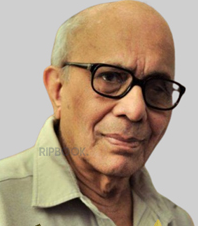
Robert Perinbanayagam 1934-2025
Robert Perinbanayagam was the eldest son of Handy Perinbanayagam (1899-1977), a much respected social activist, educator and journalist of the 20th century from Jaffna. I met Perinbanayagam in New York, only once, when I was a graduate student at the University of Illinois, Urbana-Champaign. My diary notes of this meeting on Dec 28, 1982, Tuesday indicate the following:
“[From Long Island] took the train to Manhattan. Then, by bus, reached E. 66th St., and entered 321, 3C. Met Perinbanayagam. After chatting or an hour only, I came to know that he is the son of Handy Perinbanayagam. He gave me a good lunch (a Chinese menu), ordered from a nearby Chinese restaurant. We discussed diverse topics, ranging from Sri Lankan politics, culture and horoscopes.”
The room we sat to talk had walls arranged with shelves full of books. I also remember, discussing the events that happened at the Madurai 5th International Tamil Research Conference in January 1981, in which I was a Sri Lankan delegate and read a paper. He had read my one page report that appeared in Mervyn de Silva’s vehicle Lanka Guardian (Mar 1, 1981, p. 15). Before I left him, he gave me a publisher’s pamphlet of his book The Karmic Theater: Self, Society and Astrology in Jaffna, which was published that year.
Still, it rings in my ears, how he described his civil status: ‘I’m a bachelor – a confirmed bachelor’ – as a self-deprecating boast. Then, he was 48. In the Dictionary of Biography of the Tamils of Ceylon (1997), compiled by engineer Sanmugam Arumugam, Handy Perinbanayagam has an entry, and here Robert is included in two sentences: “Handy Perinbanayagam married a daughter of Singam of Pandaitharippu, who was the head of a school in Burma. Handy’s eldest son Sidhardan, born in 1934, is a professor of sociology in the (United) States.” Also, from other articles I had read about Handy Perinbanayagam, I learnt that Robert lost his mother Amirtha on Jan 30, 1948 (the day on which Mahatma Gandhi was assassinated) before reaching 14 years. He also had younger siblings (one younger brother and two younger sisters), all then well settled in married life, according to Mr. Arumugam’s profile of Robert’s father.
After graduating from the University of Ceylon with a B.A degree in 1959, Robert moved to USA in 1962 and completed his graduate degrees in M.A (1964) and Ph.D. (1967) at the University of Minnesota. Subsequently, after short term engagements at the University of Missouri, and New School for Social Research (New York), from 1966-1972, Robert settled down at Hunter College, City University of New York and rose from the ranks of Assistant Professor, Associate Professor and Professor of social theory and social psychology, from 1972 till his retirement.
Studies focused on Jaffna society
In a few of his early published in 1960s, 1970s and 1980s, Perinbanayagam reported on his sociological and anthropological observations of Jaffna Tamil society of mid-20th century. The cultural patterns described by him in a 1965 paper, entitled ‘Caste, religion and ritual in Ceylon’, particularly with reference to Jaffna peninsula, had vanished now, due to multiple causes – political, economic and military conditions. In a 1977 paper with the title ‘The structure of motives’, Perinbanayagam described the use of astrology in Ceylon, especially in Hindu cultural milieu. The role of astrologer in examining the horoscopes of potential bride and potential bridegroom for the parents of both parties was described in detail. According to his description, ‘twelve aspects of the two horoscopes in conjunction’ are examined by the astrologer and recommendations will be offered in three grades, namely ‘excellent, medium and no-good’. What are these 12 aspects matching? graham (asterism), thali (longevity of marriage), yoni (sexual compatibility), natchathiram (planet), g[n]anam (divine support), mahendram (probability of male issue), rasi (sign of the zodiac), rasi-antipathy (Lord of the sign), vasiyam (mutual attractiveness), vedai (mutual compatibility), viritcham (vegetation) and ayul (longevity).
Subsequently in a 1981 study published in the Anthropological Quarterly, Perinbanayagam introduced the omen beliefs prevalent in the Jaffna society, with a table. Anything and everything that can be defined as life-giving, fruitful and bountiful is defined as ‘good’ and anything that suggests life-denial, death, decay and lameness is ‘evil’. Like all Hindu society, Jaffna too derives its meaning from an agriculture-based society characterized by an economy of scarcity.” The table compiled by him, provided a list of good and evil omens in Jaffna, classified under three categories – visual, aural and move(ment). An alphabetically arranged list of identified good and evil omens for visual and aural categories is given below.
Visual good omen: brahmins (two or more), bull, costume, cow, curd ghee, deer, diamond, dog, elephant, flowers, fruits, full put, gold, grains, holy beads, honey, honeybee, horse, king, milk, monkey, peafowl, rice, sugar cane, toddy pot, virgin, white, wife, yellow color.
Visual evil omen: arm holders, ashes, bear, bones, cat, charcoal, clarified milk, cotton wood, dwarfs, empty vessels, enemies, fire, flowers (black and red colored), firewood, hair-scrambled individuals, iguana, ill individuals, inter-sex individuals, lame individuals, leather, leopard, mendicants, oil, pig, pigeon, rabbit, shaven-headed individuals, smoke, snake, wet clothes, wet mud, widows, women (barren)
Aural good omen: holy songs, auspicious music
Aural evil omen: funeral drums, sneezing, scolding, wailing
Perinbanayagam expanded this theme on analyzing the astrological beliefs of Jaffna society, in his 1982 book ‘The Karmic Theater: Self, Society and Astrology in Jaffna’. A paragraph of perceptive analysis by Gary Alan Fine of this book, for the American Journal of Sociology (July 1984; 90: 217-218).reads as follows:
“Astrologers in Jaffna have four major functions to perform for their clients: (1) delineating the career of the self, (2) aiding in making decisions, (3) “cooling out” the self, and (4) explaining and advising about immediate problems in the subject’s life. For each of these topics Perinbanayagam presents rich ethnographic evidence of how astrologers structure their readings to make sense to their clients and of the poetic nature of this reading. He demonstrates that such interpretations are based in part on the rereading of past astrological charts and on the cultural traditions of Sri Lanka. Perinbanayagam’s discussion is a clear and compelling example of how to place interpersonal negotiation within the context of a people’s folklore. It is therefore must reading for all those with an interest in the sociology of culture. He effectively bridges the divisions between social structure, culture, and social interaction.”
It should also be recorded that, Sanford Steever from the University of Pennsylvania offered a negative review for this work, with the words ‘Errors of fact, logic and methodology seriously undermine this book.” (Journal of American Oriental Society, 1985; 105: 187-188).
After my meeting with Perinbanayagam in Dec 1982, I noticed a two-page eulogy to Prof. K. Kailasapathy (1933-1982), authored by Perinbanayagam in the Lanka Guardian of March 15, 1983. One may say that, true to the definition of ‘eulogy’ his contribution was appropriate. But, I was irked by Perinbanayagam’s use of the phrase ‘He [Kailasapathy] is the only genius we have in Tamil studies. I sent him a letter, dated July 10, 1983, rebutting this particular usage to crown Kailasapathy. The content of this letter had been posted previously in 2008 [Those interested can check the link provided here https://sangam.org/2008/12/Kailasapathy.php?uid=3210]. My comment was, other Tamil scholars such as Fr. Xavier Thaninayagam, Swami Vipulananda and Prof. S. Vithiananthan deserve that honor, better than Kailasapathy. I never heard from Perinbanayagam, not even an acknowledgment letter or phone call. Well, I leave it at that. Nevertheless, I continued to study his publications (those related to Sri Lankan society) avidly for the insight he offered to sharpen my intellect. But, what he wrote subsequently about sociological theory was rather beyond my grasp. This is mainly because of my knowledge deficit in that sphere.
Vignettes from Perinbanayagam Prose
I provide a sample of Perinbanayagam’s prose here, as culled from his appreciative review of Prof Gananath Obeyesekere’s book ‘The cult of the Goddess Pattini’ (Univ of Chicago Press, 1984).
“It has always been difficult for some people in Sri Lanka to accept the integration of these strands, and typically they have sought to claim exclusivity for the former-sometimes straining historical and archaeological evidence to the breaking point. Sri Lankan culture was however simultaneously Buddhist and Hindu, Sanskritic and Dravidian, metropolitan and folk-indeed the Sinhalese people achieved a creative synthesis of Indian and local motifs. In this process everyone seems to have played a part: shamans, mythicists, kings, and counselors from the very beginning of Sinhalese social formation. Nevertheless, in recent years many others have taken their turn in trying to create a picture of a homogeneous Buddhist culture that was bodily transported from Northern India, borne by ‘Aryans’ who heroically kept their cultural authenticity and ethnic purity! Contemporary Sri Lankan society has sought to construct a polity as well as a nation with these views-often with the help of some archaeologists and historians, in addition to the half-educated politicians and the lesser journalists-with disastrous consequences. Obeyesekere’s work, carefully researched and soberly argued, demystifies many of these new myths in such a fundamental way many a chauvinist in Sri Lanka, literate and semiliterate, is going to be profoundly irritated.”
It appears to me, when compiling his bibliography for this appreciation, that Perinbanayagam was in demand as a credible book reviewer of academic tomes. Here is another bon mot from him, for the work of J.C. Heesterman’s compilation ‘Essays in Indian ritual, kingship and society’.
“Sociological and anthropological work on India has always faced the danger of falling into one of two extremes: either inquiries into specific local communities, packed with de- tails and making no attempt to situate them within the complex sociohistorical reality that is Indian civilization; or on the other hand grand generalizations about Indian civilization without any attention to specific historical and regional variations.” (Contemporary Sociology, 1986; 15 109-110).
A tribute to his Father
In one of his early papers, published in Sociological Quarterly, Perinbanayagam had also tackled the issue of charisma component of two contemporaries – Mahatma Gandhi and Hitler. I gained an impression, that this paper was a personal tribute to his father, Handy Perinbanayagam (a Gandhian in life, who was credited for inviting Gandhi to Ceylon in 1927), while he was alive.
Born on Feb 14, 1934 in Rangoon, (then, British colonial Burma), Perinbanayagam died on Nov 7, 2025 in New York, at the age of 91. One shouldn’t compare apples and oranges. May I note that being a junior contemporary of influential Prof. Stanley Tambiah (1929-2014) and Prof. Gananath Obeyesekere (1930-2025), Perinbanayagam is rather less recognized. Nevertheless, his published works do carry merit and clout. His writings had been reviewed by Doyle McCarthy in 2003. The final entry in the bibliography provides specific details.
Robert Perinbanayagam Bibliography – an incomplete list
[compiled from multiple databases, including JSTOR, SAGE, ProQuest, PubMed]
Books
Perinbanayagam R.S. – The Karmic Theater: Self, Society and Astrology in Jaffna, University of Massachusetts Press, Amherst, 1982.
Perinbanayagam R.S. – ‘Signifiying Acts’: Structure and Meaning in Everyday Life, Southern Illinois University Press, Carbondale and Edwardsville, 1985.
Perinbanayagam, R.S. – Discursive Acts, Aldine de Gruyter, New York, 1991.
Perinbanayagam, R.S. – The Presence of Self, Rowman and Littlefield, Lanham, MD, 2000.
Perinbanayagam R.S. – Games and Sport in Everyday Life: Dialogues and Narratives of the Self, Paradigm Publishers, Boulder, CO, 2007.
Perinbanayagam R.S. – The Rhetoric of Emotions: A dramatistic exploration, Routledge, 2016.
Articles
(1) Perinbanayagam R.S. Caste, religion and ritual in Ceylon. Anthropological Quarterly, Oct 1965; 38(4): 218-227.
(2) Perinbanayagam R.S. Review of ‘Symbolic Interaction: a reader in social psychology, by erome G.Manvi and Bernard Melter. Sociological Quarterly, summer 1968; 9(3): 419.
(3) Perinbanayagam R.S. The dialectics of charisma. Sociological Quarterly, summer 1971; 12(3): 387-402.
(4) Perinbanayagam R.S. Caste, politics and art. The Drama Review, spring 1971; 15(2) 206-211.
(5) Perinbanayagam R.S. Civil strife and doctrine of responsibility: a comment on the events in Ceylon. Economic Political Weekly (India), Dec 11, 1971; 6(50): 2491-2492.
(6) Perinbanayagam R.S. The definition of the situation: an analysis of the dramaturgical and ethnomethodological view. Sociological Quarterly, autumn 1974; 15(4): 521-541.
(7) Perinbanayagam R.S. The significance of others in the thought of Alfred Schutz, G.H. Mead and C.H. Cooley. Sociological Quarterly, 1975; 16(4): 500-521.
(8) Perinbanayagam R.S. The structure of motives. Symbolic Interaction, fall 1977; 1(1): 104-120.
(9) Perinbanayagam R. The significance of ‘Others’ in the thought of Alfred Schutz: a reply to Malhotra and Deegan’s comments. Sociological Quarterly, Jan 1978; 19(1): 146-151.
(10)Perinbanayagam R.S. Review of ‘The corrosion of the self: society’s effects on people’ by Thomas Kreilkamp. American Journal of Sociology, Sept 1978; 84(2): 527-529.
(11)Perinbanayagam R.S. Review of ‘Opening and Closing: strategies of information adaptation in society’ by Orrin E. Klepp. Contemporary Sociology, May 1980; 9(3): 414-415.
(12)Perinbanayagam R.S. On the autonomy of symbols. Current Anthropology, Jun 1980; 21(3): 376-377.
(13)Perinbanayagam R.S. Review of ‘Modern Sri Lanka: a society in Transition’ by Tissa Fernando and Robert Kearney. Journal of Asian Studies, Aug 1980 39(4): 861-862,
(14)Perinbanayagam RS. Self, other and astrology: Esoteric therapy in Sri Lanka. Psychiatry, Feb 1981; 44(1) 69-79.
(15) Perinbanayagam R.S. Dramas of structure, theory and performance in northern Sri Lanka. Anthropological Quarterly, Jan 1981; 54(1): 36-43.
(16) Perinbanayagam R.S. Dramas, metaphors and structures. Symbolic Interaction, fall 1982; 5(2) 259-276.
(17) Perinbanayagam R.S. Review of ‘Catharsis in Healing, Ritual and Drama’ by T.J. Scheff. American Journal of Sociology, May 1982; 87(6): 1454-1456.
(18) Perinbanayagam R. Kailasapathy. Lanka Guardian (Colombo), Mar 15, 1983 5(23) 17-18.
(19) Perinbanayagam R. Review of ‘The cult of the Goddess Pattini’ by Gananath Obeyesekere.. Contemporary Sociology, May 1985; 14(2) 224-225.
(20) Perinbanayagam R. Review of The grammar of social relations: The major essays of Louis Schneider ed by J Weinstein. Contemporary Sociology, Nov 1985; 14(6): 759- 761.
(21) Perinbanayagam R.S. The meaning of uncertainty and the uncertainty of meaning. Symbolic Interaction, spring 1986; 9(1): 105-128.
(22) Perinbanayagam R.S. Review of ‘The inner conflict of tradition: Essays in Indian ritual, kingship and society’ by J.C. Heesterman. Contemporary Sociology, Jan 1986; 15(1): 109-110.
(23)Perinbanayagam R.S. Review of ‘Disquisition on Discourse – Discursive Acts’ by Paul Colomy. Contemporary Sociology, Nov 1991; 20(6): 855.
(24) Perinbanayagam R. Review of ‘The order of rituals – The interpretation of everyday life’ by Hans.Georg Soeffner (translated by Mara Wickman). American Journal of Sociology, July 1998 104(1): 270-272.
(25) Perinbanayagam R. Telic reflections: Interactional processes, as such. Symbolic Interaction, Feb 2003; 26(1): 67-83.
(26) Perinbanayagam R.S. Review of ‘Missing Persons: a critique of Personhood in the Social Sciences’ by Mary Douglas and Steven Ney. American Ethnologist, May 2003; 30(2): 313-314.
(27) Perinbanayagam R. The other in the game: Mead and Wittgenstein on Interaction. Studies in Symbolic Interaction, 2005; 28: 341-353.
(28) Perinbanayagam R. Review of ‘Play reconsidered: Sociological perspectives on human expression’ by Thomas Henricks. American Journal of Sociology, Jul 2007; 113(1): 278-281
(29) Perinbanayagam R. The coinage of the self: money, signs and the social self. Studies in Symbolic Interaction, 2011 36: 107-136.
(30) Perinbanayagam R., McCarthy ED. Interactions and the drama of engagement. Studies in Symbolic Interaction, 2012; 39: 191-224.
(31) Doyle McCarthy E. Language and Life: a commentary on the work of R.S. Perinbanayagam. Symbolic Interaction, 2003; 26(1) 85-93.